
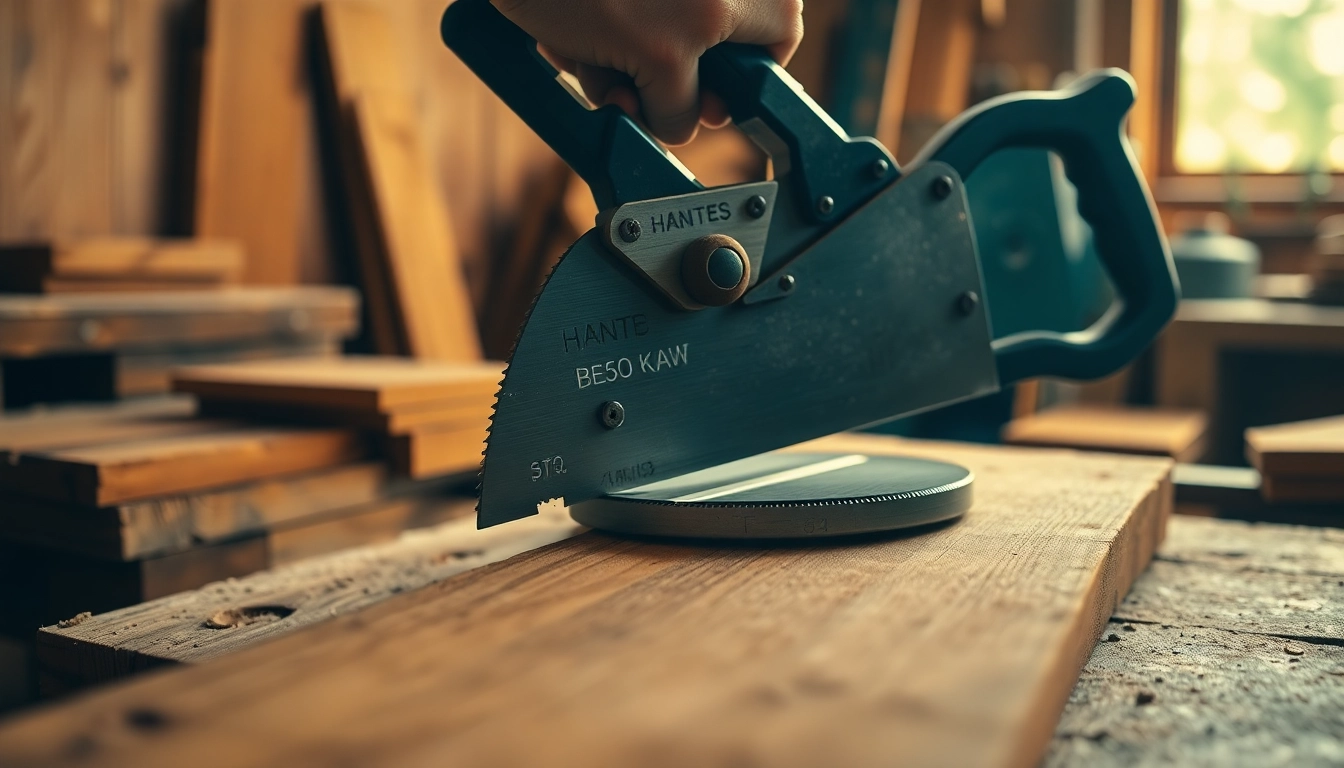
Understanding the Hand Mitre Saw
What is a Hand Mitre Saw?
A hand mitre saw is a precision cutting tool designed for making angled cuts, commonly referred to as mitres, in a variety of materials, particularly wood. Unlike power saws, the hand mitre saw is operated manually, allowing for greater control and accuracy during cutting tasks. Its design features a saw blade fixed at a particular angle, mounted on a sturdy frame often referred to as a mitre box. This tool is essential for carpenters, woodworkers, and DIY enthusiasts looking to achieve clean, precise angles when crafting picture frames, molding, or furniture components.
Key Features of Hand Mitre Saws
Hand mitre saws are equipped with several distinct features that enhance their usability:
- Adjustable Angles: Most hand mitre saws allow users to set the blade to various angles, typically 45° and 90°, though some models support a broader range of angles.
- Quality Blade: The blades are usually made from high-carbon steel or other durable materials, providing longevity and ensuring cleaner cuts.
- Ergonomic Handle: Designed for comfortable gripping, many hand mitre saws come with ergonomic handles that reduce hand fatigue during extended use.
- Mitre Box Compatibility: The saw’s design complements a mitre box, which helps guide the saw for precise angled cuts.
- Compact and Portable: As a manual tool, the hand mitre saw is lightweight and easy to transport, making it ideal for both indoor and outdoor projects.
Benefits of Using a Hand Mitre Saw
The hand mitre saw offers several advantages that appeal to both professionals and hobbyists:
- Precision: With proper technique, users can achieve incredibly accurate cuts, essential for woodworking tasks that require exact measurements.
- Cost-Effective: Hand mitre saws are generally more affordable than their power counterparts, making them accessible for anyone starting projects on a budget.
- Safety: Without electrical components, hand mitre saws pose fewer hazards, allowing for safe use, especially for beginners learning the basics of cutting techniques.
- Versatility: They can be used on various materials, including wood, plastic, and softer metals, allowing for diverse applications in different projects.
- Noise-Free Operation: Operated manually, they generate minimal noise, making them suitable for use in quiet environments, such as residential areas.
Choosing the Right Hand Mitre Saw
Factors to Consider
When selecting a hand mitre saw, several factors should be taken into account to ensure optimal performance and user satisfaction:
- Blade Quality: Opt for a saw with a quality blade that can retain sharpness over time, as this significantly impacts cutting precision.
- Cutting Capacity: Consider the maximum width and thickness of the material you plan to cut, ensuring the saw can accommodate it effectively.
- Angle Range: Ensure the hand mitre saw can handle the necessary angles for your projects, especially if you plan to work with complex mitres.
- Frame Stability: A robust and sturdy frame will facilitate steady cuts and enhance the overall safety of the tool.
- Ease of Use: Look for features like ergonomic handles and lightweight design that enhance user comfort and control.
Comparing Hand Mitre Saw Models
There are various hand mitre saw models on the market, each with unique features and pricing. When comparing models, consider reviews and specialized blogs that provide insights into usability and performance. Some popular and reputable brands include Yato, Stanley, and Irwin, each offering distinctive benefits catered to different user needs. When comparing, pay close attention to customer feedback regarding durability, ease of use, and accuracy. A side-by-side comparison can help you determine which hand mitre saw suits your specific requirements best.
User Needs and Preferences
Your choice of hand mitre saw will largely depend on your specific woodworking needs and preferences:
- Beginner vs. Professional: Beginners may prefer a more straightforward design that is easy to operate, while professionals might opt for models with advanced features for intricate projects.
- Frequency of Use: If you plan to use the saw regularly, investing in a higher-quality model could provide better reliability over time.
- Type of Projects: Consider the types of projects you are undertaking—whether simple household repairs or more complex carpentry work dictates the needs for versatility and precision in a saw.
Basic Techniques for Using a Hand Mitre Saw
Setting Up Your Workspace
Establishing an efficient workspace is crucial for effective use of a hand mitre saw. Ensure that your workspace is clear of debris and clutter to allow free movement and provide a safe cutting zone. Use a sturdy workbench or table to support the material being cut, and secure it to prevent slipping during the sawing process. Having a well-lit area will also enhance visibility, allowing for more accurate cuts. Incorporate all necessary tools within arm’s reach to maximize efficiency.
Making Accurate Cuts
For the best results when cutting with a hand mitre saw, precision is key. Begin by measuring and marking your material clearly, and then align it properly within the mitre box. Always double-check your angles using a square to ensure accuracy before proceeding. Grip the handle firmly, and apply steady pressure while sawing to create a smooth cut. Remember to follow through with your cuts and avoid forcing the blade, as this can distort your angles and increase the risk of mistakes.
Common Mistakes to Avoid
Even experienced users can make mistakes. Some typical errors include:
- Improper Measurements: Always measure twice before cutting to avoid wasting material.
- Inadequate Clamping: Failing to secure your workpiece can lead to uneven cuts and accidents.
- Neglecting Safety Gear: Always wear proper safety equipment, such as goggles and gloves, to protect yourself from sawdust and potential injury.
- Ignoring Blade Maintenance: Regularly check and sharpen your saw blade to ensure clean cuts; a dull blade will require more effort and lead to inaccuracies.
Advanced Hand Mitre Saw Techniques
Creating Complex Angles
For projects that require more than just basic mitre cuts, mastering the art of creating complex angles with your hand mitre saw is essential. Practice measuring and setting precise angles, such as compound cuts, which require both a bevel and a mitre angle. These angles can be crucial when creating joints for items like multi-faceted frames or intricate furniture components. It’s advisable to practice on scrap material before executing complex cuts on your primary materials, enhancing your precision and confidence.
Using Hand Mitre Saw for Various Materials
Though primarily designed for wood, a hand mitre saw can also be adapted for use on other materials, including plastic and softer metal. When cutting plastic, choose a fine-toothed blade to prevent chipping and cracking. For softer metals, a blade designated for metal cutting should be utilized, allowing for clean cuts without damaging the material. Always maintain a steady hand and a slow, consistent sawing motion for the best results, regardless of material.
Combining with Other Tools
Enhance the functionality of your hand mitre saw by combining it with other tools. Use a square or level to ensure your angles remain precise during projects involving multiple cuts. Countersinks or chisels can be utilized for finishing details on joints where multiple cuts converge. Additionally, a portable workbench can serve to improve stability and support for more extensive projects, providing the versatility to tackle a variety of tasks effectively.
Maintenance and Safety Tips for Hand Mitre Saw
Regular Maintenance Practices
To ensure your hand mitre saw remains in peak condition, adhere to a regular maintenance schedule. Clean the blade and frame after each use to remove any debris or resin buildup. Check for any signs of wear, such as dull teeth or loose parts, and rectify these issues promptly. If the saw uses any lubricating components, follow the manufacturer’s recommendations for maintenance to prolong the tool’s lifespan and performance.
Safety Precautions When Operating a Hand Mitre Saw
Safety should be the top priority when using any cutting tool, including a hand mitre saw. Always ensure you are wearing appropriate Personal Protective Equipment (PPE), including eye protection and gloves. Keep your fingers a safe distance from the blade, particularly when cutting small pieces. Ensure your workspace is well-organized and free from distractions, as focus is crucial for maintaining control throughout the cutting process.
Recognizing Wear and Tear Signs
Regularly inspect each component of your hand mitre saw to recognize signs of wear and tear. If the blade shows signs of dullness, bending, or damage, it needs to be replaced. The handle should feel secure and stable; any wobbling or looseness indicates that the saw may need repairs or replacement. Be vigilant about these issues to ensure both the effectiveness of your tool and your safety while operating it.
In conclusion, mastering the skills associated with operating a hand mitre saw can significantly enhance your woodworking abilities. From learning to make precise cuts to recognizing the importance of safety and maintenance, this tool serves as an essential component for carpentry, remodeling, and diverse DIY projects. If you’re looking for a unique collection of hand mitre saw options, explore the extensive inventory available at Mistrer Worker, where quality craftsmanship meets affordability.